
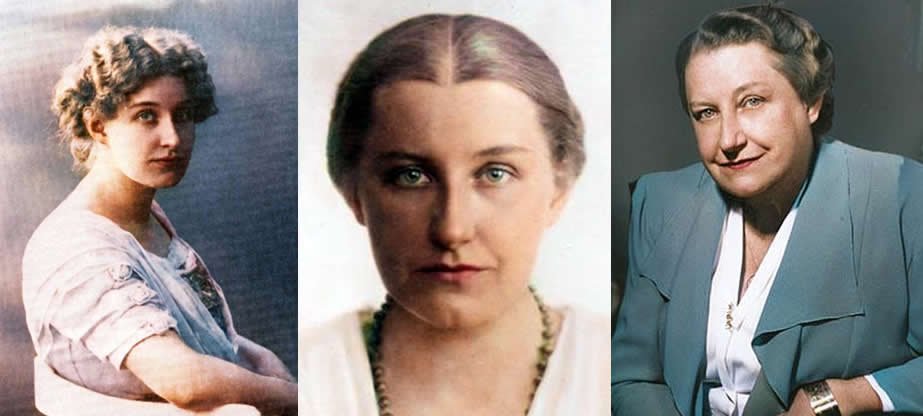
musical Theatre is more than animated cartoons on stage, jukebox revues, and revivals of revivals.
this show is
none of those things.
Following the remarkable life of German author and screenwriter THEA VON HARBOU, Woman in the Moon develops contemporary themes, including
Women pressured to sacrifice their own careers by the men they love,
Whether any artist can maintain integrity in an authoritarian society,
The cost of being uninvolved in social change,
The corrosive ironies of fame.
. . . and it’s entertaining!
synopsis
Act One
In the Penitentiary of Time Museum, a docent introduces three incarnations of Thea von Harbou: the Author, the Celebrity, and the Survivor. Visitors’ questions awaken these avatars, transporting us to the past.

Harbou as Juliet in the
Balcony Scene
She sells her first story as a child and her first novel as a teen. In her twenties, she acts successfully while writing best-sellers. She marries actor Rudy Klein-Rogge, who pressures her to quit the stage to support his acting career with her writing. After WWI, Rudy enters cinema and pressures a reluctant Thea into writing a screenplay. The experience transforms her; she realizes movies are her destiny.
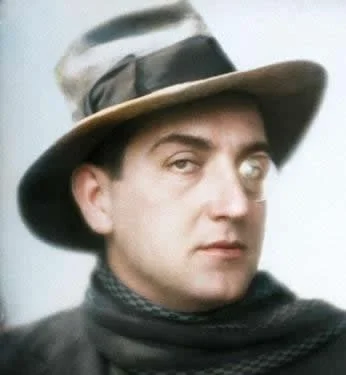
A Young Fritz Lang.
Soon paired with Fritz Lang, she finds him personally repulsive, but their creative synergy is magic. She divorces Rudy and marries Fritz, who demands her screenwriting exclusivity. Their 1920s films bring them global fame, but Fritz's serial infidelity guts the marriage. In 1933, she meets her true love, young Indian academic Ayi Tendulkar. She divorces Fritz just as the Nazis seize power and they face an uncertain future.

Ayi Ganpat Tendulkar and
Thea von Harbou
Act Tw0
Thea must navigate strict filmmaking rules imposed by Josef Goebbels, who bans thought-provoking art in favor of pure entertainment. She cleverly works around the system to maintain her artistic integrity. In 1938, Nazi miscegenation laws force her to send Tendulkar back to India. She stays close to Berlin's Indian community, who pressure her to join the Nazi party to gain leverage to protect them.

Harbou as a Trümmerfrau
After the war, she is arrested (along with all Party members) and banned from the motion picture business for almost four years. Stripped of her celebrity and her livelihood, she performs a heroic act: She voluntarily becomes a Trümmerfrau, a “Rubble Woman,” helping to clear Berlin's heavy war rubble by hand. When the ban lifts, she returns to film work. In 1954, she is finally honored at the Fourth Berlinale. Leaving the event—the recognition she deserves almost within her grasp—she tragically falls, breaks her hip, and dies two days later. We return to the museum, where her monumental legacy remains largely forgotten today.
Sample the Music
Excerpts from show songs: Girls, Girls, Girls!, Everything I am (I Could Never Leave My Home), Blue Martini, When the Time Comes, I Like the Way That You Think, and Don’t Make Me Love Again (Act I Finale).

Award-winning creators composer John Mucci and author Richard Felnagle have have utilized decades of theater and television experience to craft this two-act play requiring a minimum cast of six women and four men.