
Click below to listen to
“The Hidden Architect of German Cinema,”
an AI podcast commentary her life.

Thea von Harbou published many books, including children’s books, poetry, novellas, essays, and novels, but until recently, the English-speaking world has known her works only the translations of her sci-fi movie novels: Metropolis and Woman in the Moon. We are happy to announce that we have translated and published two important Harbou novels never before available in English:
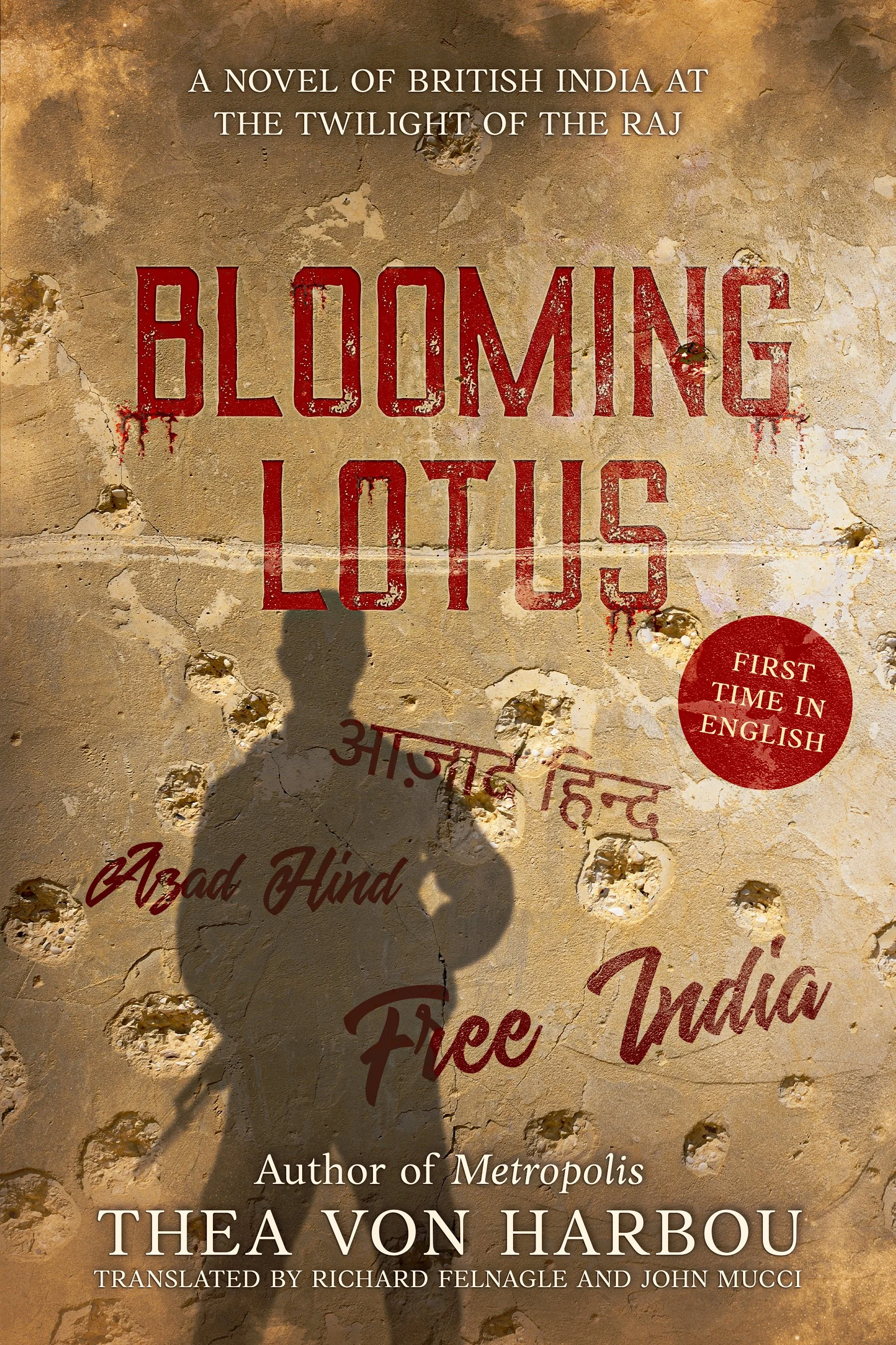
Blooming Lotus is a searing indictment of the British colonial system in India during the late 1930s. Utilizing stories told to her by members of the Indian community in Berlin, the novel paints a starkly realistic picture of British indifference and atrocities. This book was so realistic that after WWII, the British punished her by having her banned from the motion picture industry for almost four years. One of her finest works, Lotus is essential reading for anyone who knows Harbou only through her sci-fi fantasies.

The Indian Tomb is an adventure novel she wrote during the First World War, and it is the first project that she worked on with Fritz Lang. A comparison of the book with the 1921 film they wrote (available on YouTube) provides great insights into the working relationship between Lang and Harbou. She humanizes Lang’s penchant for bloody melodrama, and the result is a winning collaboration that produced their legendary films of the silent and early sound era. Their adaptation of this book for the screen is dramatized in our play.

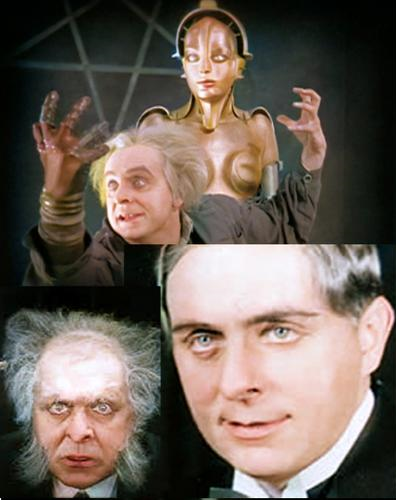
Rudolf Klein-Rogge:
The “Lon Chaney” of Germany
Thea’s first husband, Rudolf Klein-Rogge, was one of finest character actors in Weimar Germany. He divorced her in 1920 after the suicide of Lang’s first wife, and yet they remained friends and colleagues, and Lang used him repeatedly for major roles in his iconic films: “Rotwang” in Metropolis, “Dr. Mabuse” (the insane lord of crime) in three films, and “Haghi” (master spy) in Spies among other roles. After Lang divorced Thea in 1933, Rudy also starred in her first two directing efforts Elisabeth and the Fool and Little Hannele’s Ascent to Heaven.
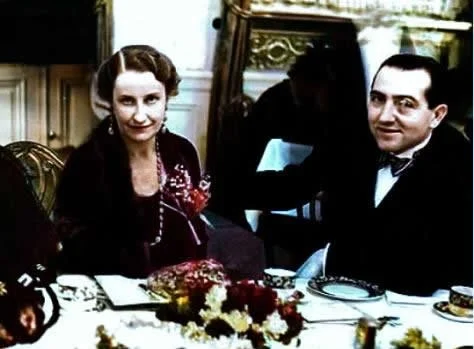
Fritz Lang:
Thea’s Second Husband
Her screenplays for Fritz Lang elevated them to the status of Berlin’s Power Couple for the Weimar era. Actress Lil Dagover remarked, “For me, Fritz Lang was one of the most elegant figures on the scene at the time. If he—tall, athletic, always with his monocle—walked into a ballroom next to the beautiful, clever and funny Thea, then both of them were immediately the center of attention: they were a couple who simply couldn't be overlooked." Alas, the marriage was a sham. Lang was a brute and a serial adulterer, and when the Nazis came to power in 1933, Lang divorced von Harbou and fled Germany to pursue a much less successful career in Hollywood without Harbou.

Ayi Ganpat Tendulkar:
Thea’s Forbidden Love
Thea’s third husband was the dark-skinned, magnetic Ayi Ganpat Tendulkar. A graduate student and a journalist, Ganpat was seventeen-years her junior, but they shared a passionate belief in freeing India from the grip of the British. They married promptly in 1933 after Lang’s exit from Germany—a marriage that was strictly forbidden by the Nuremberg Laws. For six years, they successfully managed to hide their marriage from the Nazis. But within a month of the catastrophic events of Kristallnacht, she was was called in for questioning about him. She decided his staying in Berlin would be too dangerous for him, and in January of 1939, she released him from his vows, and he returned safely to India.